Digital Marketing Strategy Design for a Premium Brand Showroom
Designed the digital marketing strategy for Equipment Manufacturer C's showroom dedicated to its top-tier product line. Based on deep psychological analysis of dual targets—architects/designers (B2B) and affluent end users (B2C)—redefined the core challenge and proposed multiple strategic scenarios. Further conducted cross-analysis of advertising performance data against physical visit records, deriving structural insights that diverged from the outsourced partner's standard reporting, and drove the redesign of the evaluation framework itself.

Challenge
Equipment Manufacturer C opened a new showroom in central Tokyo dedicated exclusively to its top-tier product line, requiring digital advertising to drive qualified visits. However, the target audience—affluent consumers and architects—valued exclusivity and rarity, meaning conventional advertising approaches risked undermining the very brand experience they expected. The challenge needed reframing: not "how to increase visitor numbers through advertising," but "how to build conviction that this place is worth visiting—without compromising the brand's sense of exclusivity."
Approach
① Market Structure and Target Psychology Analysis
Conducted PEST analysis and competitive structure analysis across premium brands to identify differentiation opportunities. Created empathy maps for both B2B (architects and designers) and B2C (affluent end users), designing hypothetical journey maps across seven stages that mapped psychological states, barriers, and opportunities for each target segment.
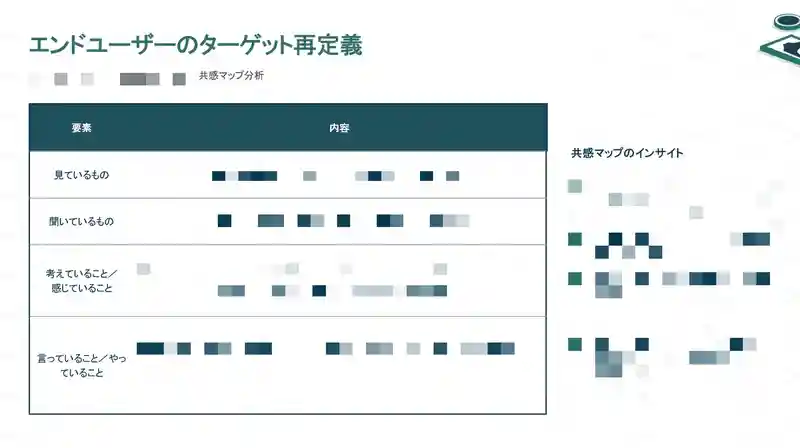
② Redefinition: Questioning the True Nature of the Challenge
Based on the analysis, redefined the conventional brief of "increase visitors through advertising." The essential challenge was reframed as "building conviction that this place is worth visiting—without compromising the brand's exclusivity." Identified the B2B2C dynamic where architect recommendations drive end-user visits, and designed a circular trust-building framework where brand credibility compounds over time.

③ Designing and Presenting Multiple Strategic Options
Developed two strategic approaches: an Optimization-Driven model (efficient integration of established advertising methods from awareness to visitation) and an Experience-Driven model (concentrating investment in experience quality to activate a word-of-mouth loop). Compared both across six dimensions—budget allocation, execution difficulty, risk profile, growth trajectory, competitive advantage, and advertising dependency—supporting the client's decision-making based on their priorities.
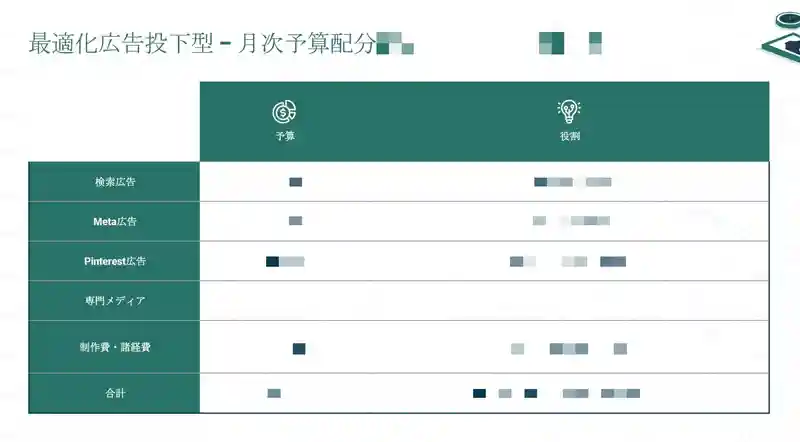
④ Multi-Layered Data Analysis: Reading the Structure Behind Surface Metrics
Conducted independent analysis beyond the outsourced partner's standard monthly reporting. Through backfill analysis—recalculating conversions by accounting for the time lag between ad clicks and applications—discovered that the true CPA was approximately 57% better than the initially reported figure. Cross-validated advertising conversion data against physical visit records, identifying structural measurement issues (data discrepancies caused by tag interference and a shared thank-you page). Age-segment analysis revealed that certain demographics were visiting the showroom through non-advertising channels, uncovering channel-specific targeting characteristics.
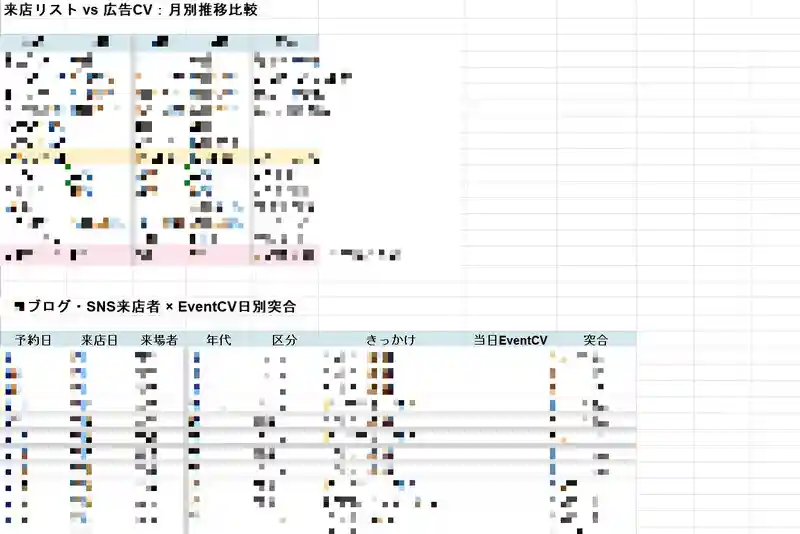
⑤ Evaluation Framework Redesign and Strategic Feedback
Identified that single-month evaluation was structurally inappropriate for high-consideration products, as 76% of clicks converted in subsequent months. Proposed a minimum two-month rolling window evaluation framework. Visualized the tradeoff between CPA improvement through targeting refinement and resulting reach contraction, driving the rebalancing of efficiency versus scale. Proposed measurement environment improvements—tag separation, thank-you page isolation, and granular visit-source categorization—to elevate data accuracy for future optimization cycles.
Results
- Discovered and demonstrated through backfill analysis that the reported CPA was effectively ~57% better than initially stated
- Best-performing segment achieved a CPA approximately 1/4 of the overall average
- Blog/SNS-attributed showroom visits increased approximately 6.5x compared to pre-advertising baseline
- Total showroom visits grew +51% month-over-month (combined effect of advertising and other channels)
- Identified structural measurement issues through cross-validation of advertising data and visit records, driving tracking improvements
- Proposed the shift from single-month to rolling-window evaluation, establishing an assessment framework suited to high-consideration products